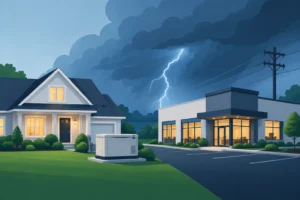

A Gulf Coast outage can turn from inconvenient to costly in a matter of hours. When the power is out, air conditioning stops, refrigerators begin warming, security systems may go offline, and a business can lose the ability to serve customers. The choice between standby versus inverter generators comes down to one central question: do you need temporary portable power, or do you need your property protected automatically for the duration of an outage?
Both generator types have a place. An inverter generator can be useful for a campsite, a tailgate, or a short-term need at a small job site. A permanently installed standby generator is designed for a different responsibility: keeping a home or business running when severe weather, hurricanes, damaged utility lines, or extended outages disrupt normal life.
Standby Versus Inverter Generators at a Glance
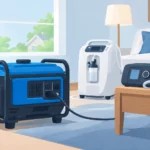
An inverter generator is a compact, portable unit that produces electricity through an engine and uses electronic controls to create clean, stable power. Many are quiet for their size and are suitable for powering sensitive electronics. They typically run on gasoline, although some models can use propane.
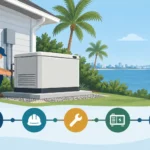
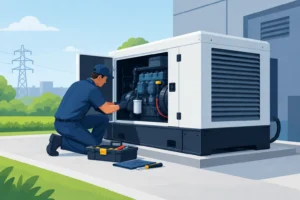
A standby generator is a permanently installed backup power system. It is connected to the property’s electrical system through an automatic transfer switch and usually fueled by natural gas or propane. When utility power fails, the system detects the outage, starts automatically, and transfers selected circuits or the whole property to generator power.
That difference changes the ownership experience. With an inverter generator, someone must retrieve it, move it outdoors, add fuel, connect equipment correctly, and manage what can be powered. With a standby system, the generator handles the transition while you remain safely inside.
What a Standby Generator Protects During an Outage
For homeowners in Fairhope, Daphne, Spanish Fort, Gulf Shores, Orange Beach, and surrounding Baldwin County communities, backup power is often about preserving normal household functions during uncertain weather. A properly sized standby generator can keep critical systems operating, including refrigeration, lights, internet equipment, security systems, medical equipment, garage doors, well pumps, and device charging.
Depending on the generator size and electrical layout, it can also power central air conditioning, water heaters, electric ranges, pool equipment, and other major loads. Some homes choose essential-circuit coverage to manage the most important needs. Others choose whole-home backup power so the property continues operating with far fewer compromises.
Businesses have similarly practical reasons to choose automatic standby power. A generator can help protect refrigerated inventory, point-of-sale systems, communications, emergency lighting, security equipment, office technology, and customer service. The right system depends on the building’s electrical demand, the equipment that must remain online, and how long the organization can afford to be without power.
Where Inverter Generators Make Sense
An inverter generator is not a lesser product. It is simply built for a narrower purpose. It can be a sensible choice if you need portable electricity for occasional use, want to power a few small appliances, or need quiet power away from your home’s electrical system.
For example, an inverter generator may keep a refrigerator cold, charge phones, run a few lights, and support a small window unit or fan during a brief outage. Its clean electrical output can also be a good fit for laptops, televisions, and other sensitive electronics.
The limitations become clearer during a major storm. Portable generators have limited output compared with most standby units, and gasoline must be stored safely and replenished. During widespread outages, fuel stations may be closed, crowded, or without power themselves. A portable unit also needs a safe outdoor location, proper extension cords or an approved transfer connection, and regular monitoring.
Most importantly, a portable inverter generator does not start itself. If an outage begins while you are asleep, traveling, managing an emergency, or away from a second home, it cannot protect the property until someone is present to set it up.
Automatic Operation Is the Major Difference
The defining advantage of a standby generator is automatic operation. The automatic transfer switch constantly monitors incoming utility power. When it senses an outage, it separates the property from the grid and signals the generator to start. Once the generator reaches stable operating speed, the transfer switch moves the electrical load to backup power.
When utility power returns, the system transfers the load back and the generator shuts down after a brief cool-down period. This process helps prevent dangerous backfeeding, which can occur when a generator is connected improperly and sends electricity back onto utility lines.
Automatic operation matters during hurricane season, but it also matters on an ordinary summer afternoon when a storm knocks out power while nobody is home. It protects the food in the refrigerator, supports a security system, keeps a monitored property powered, and reduces the pressure of racing home to set up equipment in bad weather.
Fuel, Runtime, and the Reality of Long Outages
Fuel planning is one of the most overlooked parts of comparing standby and inverter generators. An inverter generator commonly uses gasoline from a portable tank. Runtime may range from several hours to much of a day, depending on its tank size and electrical load. Then it needs to be refueled.
A standby generator connected to an existing natural gas line can run as long as fuel service remains available and the unit is maintained. A propane-powered system uses an on-site tank, and runtime depends on tank capacity, generator size, and load. For many Gulf Coast properties without natural gas access, propane provides a dependable long-duration solution when sized correctly.
Neither fuel choice is automatically right for every property. Site conditions, fuel availability, local requirements, expected outage duration, and generator load all deserve a professional review before installation.
Installation and Safety Are Not DIY Details
Portable generators must always operate outdoors, far from doors, windows, vents, and enclosed spaces. Carbon monoxide is odorless and deadly. Running a generator in a garage, carport, shed, or near an open window is not a safe workaround, even during heavy rain.
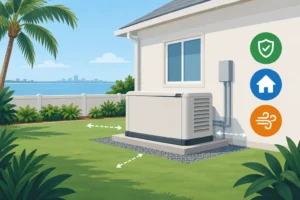
A standby generator also requires careful placement and code-compliant installation. The system needs an appropriate foundation, clearances for airflow and service access, fuel connections, electrical-panel integration, transfer-switch installation, permits where required, and final testing. Generator sizing must account for starting loads, especially air conditioners, pumps, and refrigeration equipment.
This is why a turnkey installer matters. Jubilee Generator helps property owners assess their needs, select the proper system, coordinate professional installation, integrate automatic transfer functionality, and plan ongoing service. A generator is only dependable when the complete system is designed and maintained to work together.
Choosing the Right Generator for Your Property
Start by considering what happens if power is out for eight hours, two days, or a week. If your answer is that you can manage with a refrigerator, a few lights, and phone charging, a quality inverter generator may serve as a practical emergency tool.
If you need air conditioning for comfort or health, reliable refrigeration, security coverage, connectivity for remote work, protection for a vacant or second home, or continuity for a business, a standby generator is usually the better long-term investment. It provides more capacity, longer runtime potential, and automatic response when conditions are already stressful.
Budget is part of the decision, but purchase price is not the entire cost. A portable generator may cost less upfront, yet it requires fuel management, manual setup, storage, and limited-power decisions every time the grid fails. A standby generator requires a larger initial investment and professional installation, but it is built to deliver confidence without requiring immediate action from the owner.
Plan Before the Next Storm
The best time to decide how you will handle an outage is before a named storm is approaching and store shelves are empty. A professional site evaluation can identify which appliances and systems should stay powered, whether whole-home or essential-circuit coverage makes sense, and what fuel option fits your property.
Reliable backup power is not about owning the biggest generator. It is about having the right system ready to protect the people, property, and work that depend on electricity when the grid goes quiet.