
A standby generator is most valuable on the day the utility power goes out – often during the same storm that makes service calls difficult and roads hazardous. Generator maintenance is what gives your system the best chance of starting automatically, carrying the right loads, and protecting your home or business when Baldwin County weather turns serious.
For Gulf Coast property owners, maintenance is not simply another household task. It is part of hurricane preparation, property protection, and peace of mind. A professionally maintained standby generator can keep essential systems running while you wait safely for utility power to return.
Why Generator Maintenance Matters Before an Outage
Automatic standby generators are designed to sense a utility outage, start on their own, and transfer power to selected circuits or the full electrical panel. That automatic response is a major advantage, but it depends on a system that is properly installed, exercised, inspected, and serviced.
A generator can appear perfectly fine while sitting outside for months. Batteries weaken, engine oil ages, filters collect debris, and small electrical or fuel-system concerns can develop without an obvious warning. If those issues are discovered only after an outage begins, your backup power may not be available when your family, tenants, customers, or employees need it most.
Regular service also helps protect the investment you have made in your generator system. Addressing normal wear early can help prevent more costly repairs, reduce unexpected downtime, and support reliable operation over the life of the equipment.
What Professional Generator Maintenance Should Include
The exact maintenance plan depends on the generator model, its fuel source, operating hours, age, and manufacturer recommendations. A home generator that has run briefly for weekly exercise has different needs than a commercial unit that has supported a business through extended outages. Still, a thorough service visit should look beyond whether the generator simply starts.
A trained technician typically evaluates the engine, electrical components, automatic transfer switch, and fuel supply. The goal is to confirm that the complete standby system can respond as designed, not just that the generator engine can run.
Engine and Battery Service
Your generator engine needs clean oil, proper lubrication, a healthy battery, and good airflow. During maintenance, a technician may inspect or replace oil and filters according to the recommended schedule, check coolant where applicable, inspect belts and hoses, and look for leaks or corrosion.
The battery deserves special attention. It provides the power needed to start the generator, and weak batteries are a common cause of no-start situations. Battery terminals, charging systems, connections, and overall battery condition should be checked before storm season rather than after the lights go out.
Fuel Supply and Exterior Inspection
Whether your standby generator runs on natural gas or propane, it needs a dependable fuel supply to operate under load. A maintenance visit can identify visible concerns with fuel connections, shutoff valves, regulators, or propane levels before they become an outage-day problem.
The generator enclosure should also be inspected for debris, pest activity, corrosion, standing water, loose panels, and restricted airflow. Gulf Coast humidity, salt air near the shore, heavy rain, leaves, and insects can all affect outdoor equipment over time. Keeping the area around the unit clear helps it cool correctly and gives technicians safe access for service.
Electrical and Transfer Switch Checks
The automatic transfer switch is what allows your property to move from utility power to generator power and back again. It is a critical part of the system, especially for whole-home and commercial installations. Maintenance should include inspection of wiring, connections, breakers, control settings, and transfer switch operation.
This work should be handled by qualified professionals. Generator equipment involves live electrical connections, fuel systems, moving engine parts, and manufacturer-specific diagnostic tools. A do-it-yourself check may catch a blocked air intake, but it cannot replace professional testing of the system’s electrical performance.
Generator Maintenance Between Service Visits
Property owners do not need to become generator technicians, but a few simple habits can help keep a system ready between scheduled appointments. Check the generator from a safe distance after severe weather, and pay attention to alerts displayed on the controller or sent through an available monitoring system.
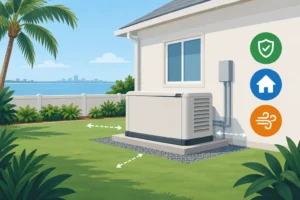
Keep the generator area clean and unobstructed. Do not store tools, lawn equipment, patio furniture, or landscaping materials against the enclosure. Trim vegetation back so the unit has the clearance specified by its manufacturer and so a service technician can reach it easily.
If your system uses propane, make sure the tank level is managed with outage season in mind. During a widespread hurricane event, delivery schedules can be delayed. The right reserve depends on your generator size, expected loads, tank capacity, and how long you may need to operate. Your generator provider can help you understand what is appropriate for your property.
Pay attention when the generator performs its scheduled exercise cycle. Most units run periodically for a short time to help verify readiness. If it does not start, runs roughly, produces an unfamiliar warning, or shows a service alert, schedule professional attention promptly. Do not assume it will correct itself before the next outage.
A Practical Schedule for Gulf Coast Properties
There is no one maintenance interval that fits every system. Manufacturer guidance always matters, and usage during a long outage may call for additional service afterward. As a general rule, annual professional maintenance is a sensible baseline for many residential standby generators, while commercial systems or high-use units may need more frequent attention.
Storm season creates a second reason to plan ahead. Do not wait until a named storm is approaching to ask whether your generator is ready. Service calendars fill quickly when severe weather is forecast, and parts availability can be limited after a regional outage. Scheduling a pre-season inspection gives you time to correct issues without pressure.
After an extended outage, it is wise to have the unit evaluated as well. Hours of continuous operation, heavy electrical loads, heat, and weather exposure can accelerate normal maintenance needs. The technician can document run hours and recommend the right service based on how hard the system worked.
When to Call for Generator Service
Some generator concerns should be addressed immediately rather than saved for the next routine appointment. Call for professional service if you notice a warning light or error code, visible fluid leaks, fuel odor, repeated failed exercise cycles, unusual noise, smoke, vibration, or failure to transfer power during a test or outage.
You should also call if your property has changed. Adding a pool pump, HVAC equipment, refrigeration, medical equipment, office technology, or other major loads can affect how your generator is expected to perform. A technician can help determine whether your current system and load priorities still match your needs.
For businesses, this review matters even more. The generator that once supported a few essential circuits may need to protect point-of-sale equipment, internet service, security cameras, refrigeration, lighting, and communications. Maintenance is a good time to make sure the backup plan still supports daily operations.
Choose Service That Covers the Entire System
Reliable backup power depends on more than the generator itself. It depends on correct sizing, proper installation, fuel availability, transfer equipment, electrical integration, and continued service from people who understand the full setup. That is why an experienced standby power contractor is often the right maintenance partner.
Jubilee Generator provides local service for Generac systems and support across other leading generator brands for homeowners and businesses throughout Baldwin County and Alabama’s Gulf Coast. A professional maintenance relationship means you have someone familiar with standby power, local weather risks, and the equipment protecting your property.
The best time to prepare is while the weather is calm and utility power is still on. Keep your maintenance current, respond to alerts early, and give your generator the attention it needs to be ready when the next outage arrives.