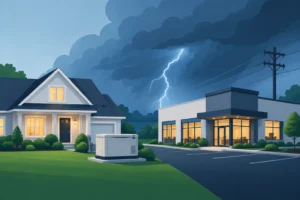

A coastal outage is rarely a brief inconvenience. After a hurricane, tropical storm, or severe thunderstorm moves through Baldwin County, restoring utility service can take days. Meanwhile, heat and humidity build indoors, refrigerated food begins to spoil, security systems go offline, and a home that should feel like a refuge becomes harder to manage.
The best generators for coastal homes are automatic standby systems sized for the way you actually live, installed above flood concerns, and protected from the salt air that comes with Gulf Coast ownership. For homeowners in Fairhope, Daphne, Gulf Shores, Orange Beach, Spanish Fort, and nearby communities, the right choice is not simply the largest generator available. It is the system that starts when power fails, carries the essential loads you depend on, and remains serviceable season after season.
Why Coastal Homes Need a Different Generator Plan
Coastal properties face more than occasional utility interruptions. They contend with hurricane-force winds, wind-driven rain, storm surge exposure in some locations, intense summer heat, and airborne salt that can speed up corrosion. A generator that works well in an inland neighborhood may need a more deliberate installation plan near Mobile Bay or the beach.
That does not mean every coastal home needs an oversized commercial unit. It means the equipment, fuel supply, placement, electrical integration, and maintenance schedule should all reflect the property. A full-time residence with central air conditioning has different requirements than a second home that must protect refrigeration, security, internet equipment, and a dehumidifier while the owner is away.
An automatic standby generator is usually the strongest fit for this job. It monitors utility power continuously and starts automatically when an outage occurs. Once it is paired with an automatic transfer switch, the system safely moves selected or whole-home circuits to generator power without the homeowner running extension cords, finding fuel, or being present at the property.
Best Generators for Coastal Homes: Start With the Type
Portable generators have a place for short-term, limited power needs. They can run a refrigerator, a few lights, or a small window air conditioner when used correctly. But they require manual setup, safe outdoor placement, refueling, and careful cord management. During a hurricane evacuation or a long outage, those demands can become a real limitation.
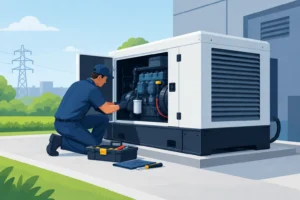
For most established Gulf Coast homeowners, an air-cooled or liquid-cooled standby generator is the more dependable answer. The generator sits permanently outside, connects to an approved fuel source, and responds automatically. You can leave ahead of a storm knowing that critical equipment can continue operating if utility power fails.
Generac is a leading choice for residential automatic standby power because it offers a broad range of home-ready systems and dependable automatic operation. Depending on the property and power needs, Kohler, Cummins, and Briggs & Stratton may also be appropriate options. Brand matters, but correct sizing, professional installation, and ongoing service matter just as much. A well-matched generator from a trusted manufacturer will do more for your peace of mind than a larger unit chosen without a load evaluation.
Size the Generator Around What Must Stay On
Generator capacity is measured in kilowatts, but homeowners do not need to become electrical experts to make a good decision. The practical question is simpler: What do you need to keep running during an extended outage?
For some homes, that means the refrigerator, freezer, lighting, internet, garage door, security system, a few outlets, and one HVAC system. For others, especially larger homes or homes with multiple air conditioners, it may mean whole-home coverage. Pool equipment, electric ranges, tankless water heaters, well pumps, electric vehicle chargers, and multiple HVAC units can significantly increase the required capacity.
A professional assessment should account for starting loads as well as normal running loads. Air conditioners and pumps use a higher surge of electricity when they start. Without proper planning, a generator can be technically large enough on paper but still struggle when several major appliances cycle on at once.
Load-management equipment can sometimes provide a smart middle ground. Rather than buying a generator large enough to run every major load simultaneously, the system can prioritize essential circuits and temporarily manage less-critical loads. This can lower the required generator size while protecting the comforts that matter most.
Fuel Choice Matters During a Long Outage
Natural gas and propane are the most common fuel choices for residential standby generators. Both eliminate the refueling routine associated with portable gasoline units, but the better option depends on the property.
Natural gas is convenient where dependable utility service is available. It provides a continuous fuel supply under normal conditions and avoids on-site fuel storage. However, homeowners should understand local gas availability and confirm that the existing line can support the generator’s fuel demand.
Propane is often an excellent choice for coastal and rural properties, especially where natural gas is unavailable. A properly sized propane tank can support a generator for an extended period, though run time depends on generator load and tank capacity. If the generator will protect a vacation home or a home in an area prone to access delays after storms, fuel planning deserves close attention.
Diesel systems are more common for larger homes, commercial sites, and applications with substantial power demands. They can be highly effective, but they require fuel storage considerations and regular fuel maintenance. The right fuel is the one that is available, safe, code-compliant, and practical for your expected outage duration.
Coastal Installation Is About More Than Placement
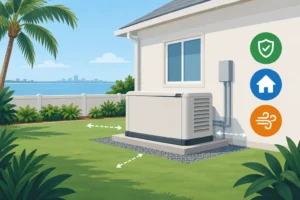
A standby generator should never be treated like an appliance that can be set beside the house and forgotten. It must be installed according to manufacturer requirements, local codes, utility clearances, and safe ventilation rules. Exhaust must remain well away from doors, windows, vents, and areas where people gather.
On the Gulf Coast, placement also calls for attention to drainage, flood exposure, access for service, and salt air. Equipment should be positioned on a stable pad and located where standing water is unlikely to create problems. In flood-prone areas, site conditions may require additional planning before installation.
Salt-laden air can affect metal components over time, particularly near the beach or open water. Regular inspections help identify corrosion before it becomes a reliability issue. Keeping the enclosure clean, checking connections, and following the manufacturer’s maintenance schedule can extend the life of the system. Coastal ownership is not a reason to avoid a standby generator. It is a reason to install and maintain one with care.
Do Not Overlook the Transfer Switch and Electrical Panel
The transfer switch is the part of the system that makes automatic backup power possible. When utility power drops, it isolates the home from the grid and transfers approved loads to generator power. This protects utility workers and prevents unsafe backfeeding.
The electrical panel and transfer equipment should be evaluated as part of the same project. Older homes, additions, detached structures, and homes with multiple panels may need a more detailed design. A turnkey contractor can identify these issues before installation day, explain the available options, and make sure the generator supports the circuits you expect it to support.
That is especially valuable for second-home owners. You should not have to wonder whether the refrigerator, HVAC, Wi-Fi, security equipment, or sump pump is actually connected when a storm hits. The system should be designed around a clear, documented power plan.
Maintenance Is What Makes Backup Power Dependable
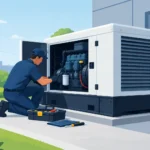
A generator is most valuable on the day you need it most, which is why maintenance should begin long before hurricane season. Automatic exercise cycles help confirm that the system starts, but they do not replace professional service. Batteries, oil, filters, spark plugs, electrical connections, fuel supply, and error codes all need periodic attention.
A service plan also provides a chance to catch coastal wear early. After major storms, a professional inspection can identify debris, water exposure, enclosure damage, or fuel and electrical concerns before the next outage. Jubilee Generator provides consultation, professional installation, and continued service so homeowners have one local team supporting the system throughout its life.
The right generator should make a power failure feel manageable, not add another emergency task to your list. Before the next storm has a name, take inventory of the systems your home cannot afford to lose and build your backup-power plan around them.