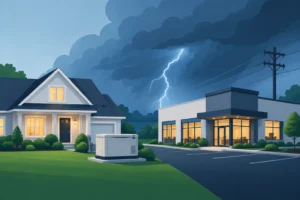

A standby generator can keep your air conditioning, refrigerator, security system, and internet running when Gulf Coast weather takes the grid down. But even the right generator can become a safety concern if it is installed in the wrong location. This generator placement safety guide explains what Baldwin County homeowners and business owners should consider before installation – especially where hurricanes, heavy rain, salt air, and tight property layouts create real-world challenges.
A properly placed automatic standby generator starts when utility power fails and supplies the circuits or systems selected for your property. It needs room to breathe, a stable foundation, safe fuel connections, and clear access for service. Placement is not an afterthought. It is part of the system that protects your property when you need power most.
Generator Placement Safety Guide: Start Outside
A permanently installed generator belongs outdoors. It produces engine exhaust containing carbon monoxide, a colorless, odorless gas that can be deadly. Never install or operate a generator in a garage, crawl space, enclosed porch, shed, or under an enclosed overhang. Opening a garage door or window does not make an enclosed space safe.
The unit must also be located so exhaust cannot enter the home or business through windows, doors, soffit vents, crawl-space vents, attic vents, or HVAC equipment. This matters even more during an outage, when a generator may run for hours or days and occupants may be sleeping inside.
Manufacturer instructions, local code requirements, and the specific generator model determine the required distances from the building and nearby openings. A qualified installer verifies these clearances during the site visit rather than relying on a guess, an old online diagram, or a neighbor’s installation. The goal is simple: give exhaust a clear path away from people and prevent it from collecting near openings.
Carbon monoxide alarms remain a critical layer of protection inside the home. Test them regularly and replace batteries or aging units according to the manufacturer’s guidance. A correctly installed standby generator reduces risk, but alarms provide a warning if exhaust from any source reaches the building.
Give the Generator Space to Cool and Be Serviced
A standby generator needs open airflow around its enclosure. Restricting that space with shrubs, fencing, storage bins, patio furniture, or decorative screens can cause overheating and make routine service harder. It can also turn a straightforward repair into a costly visit because a technician cannot safely reach the unit.
Many homeowners understandably want the generator out of sight. Screening can work, but it must be designed around the generator manufacturer’s clearance requirements. A solid fence placed too close may block airflow and direct exhaust toward the house. Plants may look harmless when installed, then grow into the required service area over time.
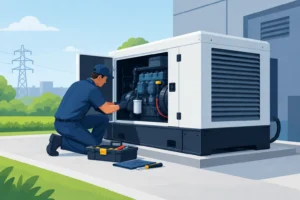
Think about the service side as well as the view from the street. Technicians need clear access to inspect the battery, oil, controls, connections, and enclosure. During hurricane season, that access can be the difference between a quick pre-storm check and a preventable delay.
Avoid placing the unit where roof runoff pours directly onto it. Downspouts should discharge away from the generator pad, not against the enclosure or fuel and electrical connections. Salt air and moisture are part of life near Gulf Shores and Orange Beach, so keeping water from repeatedly collecting around equipment helps support long-term reliability.
Flooding Changes the Placement Conversation
On the Alabama Gulf Coast, the lowest available spot is rarely the best spot for a generator. Heavy rain, poor drainage, storm surge exposure, and high water tables can all affect a proposed location. A generator should sit on a properly prepared, level pad above areas where water commonly pools.
For waterfront, low-lying, or flood-prone properties, placement may require additional planning. Elevating equipment, improving drainage, or selecting a different side of the building may be necessary. The correct solution depends on the property’s elevation, drainage patterns, local requirements, and the generator system itself.
Do not assume a concrete slab alone solves a water problem. If runoff channels toward the slab, standing water can still affect access, surrounding soil, and connected equipment. Walk the property after a hard rain if possible. Notice where puddles form, where gutters discharge, and whether the route to the electrical panel or fuel source crosses a wet area.
A site assessment should account for hurricane debris, too. Avoid locations beneath weak tree limbs or in a spot likely to collect loose fencing, branches, or roof materials. No outdoor equipment is immune to severe storm conditions, but thoughtful placement reduces avoidable exposure.
Consider Noise Without Sacrificing Safety
Standby generators are designed for residential use, but they are not silent. The sound level is usually most noticeable when the unit starts, exercises weekly, or runs under a heavy load. Placement should respect bedrooms, outdoor living spaces, nearby homes, and business operations.
The quietest-looking location is not always the safest one. Tucking a generator into a narrow side yard near bedroom windows may reduce its visibility, yet create more noise for occupants and complicate exhaust clearances. Moving it farther from a patio may improve comfort but create a longer route for electrical or fuel connections.
That is the trade-off a professional consultation helps resolve. The best location balances safety, code compliance, service access, appearance, noise, fuel routing, and installation cost. It is rarely about one perfect measurement.
If your property has a homeowners association, verify any screening, setback, and appearance requirements before work begins. HOA approval does not replace electrical, building, fuel-gas, or manufacturer requirements, but addressing both early prevents unnecessary changes later.
Keep Fuel and Electrical Connections Protected
Automatic standby generators commonly use natural gas or propane. Fuel piping must be sized and routed correctly so the generator receives adequate fuel while other appliances operate. The location of existing gas service, propane tanks, regulators, and underground utilities may influence where the generator can safely sit.
Electrical placement matters just as much. The generator must connect to an automatic transfer switch or approved service equipment that isolates it from the utility during an outage. This prevents dangerous backfeeding, protects utility workers, and allows the generator to start and transfer power automatically.
A placement decision that looks simple from the yard can become complex once fuel and electrical routes are considered. Long runs, hardscape crossings, landscaping, drainage, and panel location can all affect the project. A turnkey installer evaluates the complete path before recommending a location, not after a pad has already been poured.
What a Professional Site Visit Should Address
Before installation, a qualified generator contractor should walk the property with you and discuss the systems you want protected. For a home, that may include HVAC, refrigeration, well pumps, lighting, internet, security, and medical equipment. For a business, it may include refrigeration, point-of-sale systems, communications, security, and critical operations.
The visit should also review these placement questions:
- Where exhaust can safely discharge away from doors, windows, vents, and occupied areas.
- Whether the proposed location remains accessible for maintenance and emergency service.
- How the site handles heavy rain, flooding, roof runoff, and storm debris.
- Where fuel and electrical connections can be routed safely and in accordance with applicable requirements.
- Whether local permitting, utility coordination, setback rules, or HOA requirements affect the plan.
This process is especially valuable for first-time buyers. Generator sizing and placement work together. A larger unit is not automatically better if it does not fit the site safely, meet fuel requirements, or serve the circuits that matter most to your household or operation.
Do Not Treat Placement as a DIY Shortcut
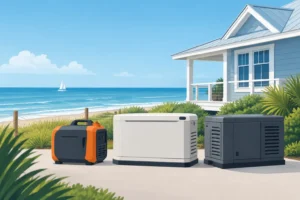
Portable generators and permanently installed standby generators have different use cases, but both require outdoor operation and careful carbon monoxide protection. A portable unit should never be brought indoors during rain, heat, or inconvenience. If storm conditions make safe outdoor operation impossible, do not operate it.
A whole-home standby system adds transfer equipment, fuel connections, load calculations, permitting, and model-specific installation requirements. These are not details to leave to a general handyman or a last-minute storm preparation project. Professional installation protects the equipment warranty, the home’s electrical system, and the people inside.
For Baldwin County properties, local experience matters. A placement plan that accounts for coastal rain, hurricane preparation, lot layout, and year-round service access gives your generator a better chance to perform when the utility power does not. Jubilee Generator can help identify a location that protects your home or business without asking you to become an expert in codes, fuel systems, and electrical integration.
Before the next storm watch is issued, take a look at the space around your home or business with fresh eyes. The safest generator location is one that stays clear, dry, accessible, and ready to provide power you can count on.