
When a family member depends on oxygen, a CPAP or BiPAP machine, a hospital bed, refrigerated medication, or another electrically powered device, an outage is more than an inconvenience. The best generators for medical equipment provide dependable, automatic backup power so critical care can continue while the utility is down.
For homeowners across Baldwin County and Alabama’s Gulf Coast, hurricane season makes that protection especially meaningful. A properly designed standby generator can restore power automatically, often before the home has time to become uncomfortable, dark, or unsafe. The right choice is not simply the generator with the largest number on its label. It is the system sized for the equipment that must stay on, installed correctly, and maintained so it is ready when conditions turn bad.
What Makes a Generator Suitable for Medical Equipment?
Medical equipment needs clean, stable power and a dependable source of fuel. That is why an automatic standby generator is usually the strongest long-term solution for a home where power loss could interrupt essential care.
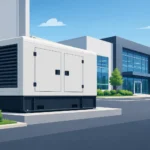
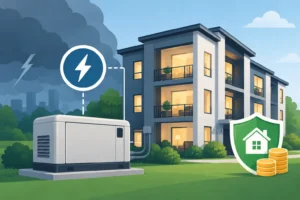
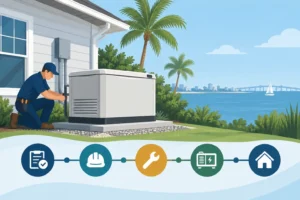
A standby system sits permanently outside the home. When utility power fails, an automatic transfer switch detects the interruption, starts the generator, and transfers selected circuits or the entire home to generator power. When grid power returns, the system transfers back and shuts down automatically. There is no need to carry a portable unit through rain, connect extension cords, or ask someone to start equipment in the middle of the night.
That automatic response matters when the person using the equipment is asleep, home alone, has limited mobility, or cannot safely manage a manual setup. It also protects the people responsible for their care from having to make urgent decisions during severe weather.
Stable voltage and frequency are just as important as capacity. Quality residential standby generators are designed to support sensitive household electronics along with essential appliances and medical devices. A professional installation also includes proper electrical-panel integration and transfer equipment, which helps prevent dangerous backfeeding into utility lines.
Best Generators for Medical Equipment: Start With the Load
The best generator for one household may be undersized or unnecessarily large for another. Generator selection begins with a load assessment, not a guess based on square footage alone.
First, identify every device that must remain powered during an outage. An oxygen concentrator, CPAP or BiPAP machine, suction device, mobility equipment, feeding pump, medication refrigerator, lighting, phone charger, and internet connection may all belong on the priority list. Then consider the systems that keep the home safe and livable: HVAC, refrigeration, well pumps, security systems, garage access, and selected kitchen circuits.
Some equipment has a modest running wattage but a higher startup requirement. Air conditioners, refrigerators, pumps, and certain medical devices can draw more power when starting than when running. That is why a professional load calculation is safer than adding a few wattage labels and hoping for the best.
Ask the equipment manufacturer or medical provider for the device’s electrical requirements, battery runtime, and any generator-use guidance. Keep that information available before storm season. A generator contractor can use it to help determine what the system must support, while the medical provider remains the authority on the equipment and the patient’s care plan.
Essential-load systems
An essential-load standby generator powers the circuits that matter most. This approach can be a practical fit when the main goal is uninterrupted operation of medical equipment, refrigeration, a few lights, communications, and limited climate control.
It may cost less than whole-home coverage and can be easier to size around a focused list of priorities. The trade-off is that not every appliance or room will operate during an outage. For many households, that is a sensible compromise if the critical needs are clearly identified in advance.
Whole-home standby systems
A whole-home generator is designed to carry the broader electrical demand of the property. It can support medical equipment while also maintaining major comforts and protections such as central HVAC, kitchen appliances, lighting, security, connectivity, and more.
For a household with a medically vulnerable resident, whole-home coverage can remove a great deal of uncertainty. There is less need to decide which appliance gets turned off or whether starting the air conditioner will affect another critical load. Still, whole-home systems require careful sizing, particularly in larger homes with multiple HVAC units, pools, workshops, or high-demand electric appliances.
Why Portable Generators Are Often a Limited Answer
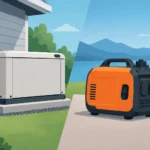
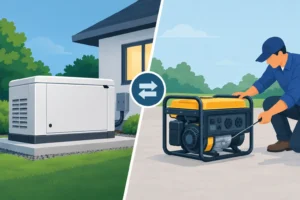
Portable generators can serve a purpose for short-term, limited power needs, especially when used outdoors with safe connections and proper fuel storage. But they require manual operation, refueling, weather awareness, and a safe way to connect the equipment. They also create carbon monoxide risks when operated too close to a house, garage, porch, or open window.
For medical equipment, those limitations can become serious. A portable unit may not start automatically if an outage occurs overnight. It can run out of fuel, require lifting or handling during a storm, and leave the family dependent on extension cords or a manually operated transfer setup.
A portable generator should not be treated as the only emergency plan for life-sustaining equipment. Battery backups, spare batteries, an evacuation plan, emergency contact information, and guidance from the care provider all remain important. A permanently installed standby system adds a stronger layer of protection by making home power restoration automatic.
Choosing Between Generac and Other Standby Brands
Generac is a leading choice for residential automatic standby power because its systems are widely used, purpose-built for home backup, and supported by a broad service network. For many Gulf Coast properties, a Generac standby generator paired with the right automatic transfer switch offers the balance of dependable operation, available sizing options, and long-term support homeowners want.
Kohler, Cummins, and Briggs & Stratton also offer standby solutions that may fit particular applications. The best brand depends on the property’s electrical demand, fuel availability, equipment preferences, service access, and installation requirements. Brand matters, but the quality of the design, installation, and ongoing maintenance matters just as much.
A generator is not a plug-in appliance. It is an integrated power system that must communicate correctly with the home’s electrical service and operate safely during utility loss. Working with a qualified local contractor helps ensure the equipment, transfer switch, fuel connection, permits, and electrical work all support the same goal: reliable power when it is needed most.
Fuel Choices Matter During Gulf Coast Outages
Most residential standby generators operate on natural gas or propane. Natural gas can be convenient where dependable utility gas service is available because the generator draws from the existing line and does not require routine refueling. However, homeowners should still consider local infrastructure and the nature of the risks their property faces.
Propane gives the homeowner an on-site fuel supply, which can be valuable during extended outages. Its practical limitation is tank capacity. A larger generator running more household loads will consume fuel more quickly, so runtime planning should be part of the conversation.
There is no universal fuel winner. The right choice depends on the home’s location, local utility availability, the size of the generator, expected outage duration, and whether the system supports only essentials or the whole house.
Installation Details That Protect Your Family
Reliable backup power depends on more than selecting a generator. The installation should account for local codes, manufacturer clearances, flood exposure, drainage, electrical-panel capacity, fuel connections, and access for future service.
Along the Alabama Gulf Coast, placement deserves special attention. Heavy rain, wind-driven debris, salt air in coastal communities, and storm-related flooding can all affect where equipment should be located. A local contractor can evaluate the property and recommend a location that supports safe operation and service access without creating unnecessary risk.
The automatic transfer switch is central to the system. It isolates generator power from utility power and directs electricity to the chosen circuits or the full electrical service. This is what allows the generator to operate automatically and helps protect utility workers and the home’s electrical system.
Jubilee Generator provides consultation, professional installation, electrical integration, and ongoing service for homeowners and businesses throughout Baldwin County. That full-service approach lets families focus on the care needs inside the home while trained professionals handle the power system outside it.
Maintenance Is Part of Medical Preparedness
A standby generator should exercise regularly and receive scheduled maintenance. Oil, filters, batteries, fuel connections, electrical components, and error codes all need attention over time. A generator that was installed years ago but never tested is not the same as a generator backed by a consistent service plan.
Before severe weather arrives, confirm that the generator is in automatic mode, clear away leaves and stored items from the enclosure, and verify that the household knows what the system is designed to power. Keep medical equipment instructions, provider contacts, and emergency backup plans in a known location. If equipment has changed since the generator was installed, have the load plan reviewed.
The goal is not merely to own backup power. It is to have a system that starts, transfers, and carries the loads your family depends on without adding stress to an already difficult situation. For homes where medical equipment is part of daily life, that confidence can make every storm forecast easier to face.