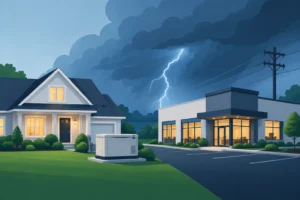

A power outage does not wait for a convenient moment. It can happen during a packed dinner service, a summer heat wave, a storm evacuation, or a busy check-in period at your rental property. Commercial generators give Gulf Coast businesses a planned response when utility power fails, keeping critical systems operating without scrambling for extension cords, temporary equipment, or last-minute decisions.
For a business owner, backup power is about more than keeping the lights on. It protects inventory, helps employees work safely, preserves customer confidence, and gives you a way to continue serving your community when the grid is down. The right system is sized around your operation, installed professionally, and ready to start automatically when it is needed.
What Commercial Generators Protect During an Outage
Every business has a different definition of essential power. A restaurant may need refrigeration, freezer equipment, point-of-sale systems, lighting, and ventilation. A medical or professional office may prioritize computers, communications, security, climate control, and critical equipment. For a retail store, hotel, marina, or property management company, reliable power can mean keeping access systems, internet service, pumps, elevators where applicable, and customer-facing operations available.
An automatic standby generator is designed to carry those selected loads after a utility interruption. Once it detects a loss of power, the automatic transfer switch safely moves the building from utility service to generator power. When normal service returns, the system transfers back and the generator shuts down after a brief cool-down period.
That automatic response matters when nobody is at the property, when staff are focused on customers, or when an outage occurs overnight. It also removes the risks and limitations of a portable unit, including manual setup, fuel handling, exposed cords, and uncertainty about what can be powered safely.
Why Gulf Coast Businesses Need a Backup Power Plan
Along Alabama’s Gulf Coast, outage planning cannot be limited to hurricane season. Tropical weather, high winds, severe thunderstorms, utility equipment damage, and local grid disruptions can all interrupt power. In coastal communities such as Fairhope, Daphne, Spanish Fort, Gulf Shores, Orange Beach, Loxley, and Bay Minette, a prolonged outage can quickly affect temperature-sensitive inventory, occupied properties, and essential customer services.
The cost is not always obvious at first. Refrigerated food or medicine can be lost. Security cameras and alarm systems may go offline. Internet-based payment systems stop working. Employees may be unable to access schedules, records, or communications. A business that has prepared for these realities can make calmer, safer decisions while nearby operations are forced to close.
A standby system does not mean every circuit in a building must be powered. In fact, a carefully planned essential-load approach is often the most practical option. The goal is to identify what must stay on, what can wait, and how long the business needs to operate independently.
Choosing the Right Generator Size for Your Business
Generator sizing is not a guess based on the square footage of a building. It begins with a clear look at the electrical loads that matter during an outage. Large motors, HVAC equipment, commercial refrigeration, pumps, kitchen equipment, server systems, and lighting all place different demands on the system. Some equipment also requires additional power at startup.
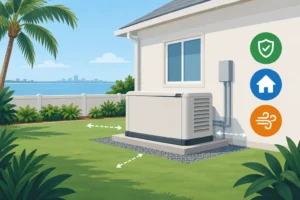
A professional site evaluation helps determine whether your business needs to support a limited group of essential circuits, a designated emergency panel, or most of the facility. It also identifies practical details that can affect the project, such as available gas service, electrical-panel capacity, generator placement, ventilation clearances, local code requirements, and access for future maintenance.
There are trade-offs. A smaller system can protect the most critical equipment at a lower initial cost, but it may require operational limits during an outage. A larger system provides more flexibility and can support broader operations, yet it requires a greater investment and appropriate fuel capacity. The right choice depends on what a shutdown would cost your business, not simply on the biggest generator available.
Fuel Supply Is Part of the Decision
Most permanent commercial standby generators operate on natural gas or propane. Natural gas can offer a continuous supply where dependable utility gas is available. Propane gives businesses more independence from gas infrastructure, but the tank must be sized to provide the desired runtime and managed before severe weather arrives.
Fuel planning should reflect the reality of your site. A business in an area with frequent, extended storm outages may need a different strategy than an office that mainly needs protection from shorter disruptions. This is one reason a local consultation is more useful than selecting a unit from a catalog.
Professional Installation Makes the System Dependable
A generator is only as dependable as the system around it. Proper installation includes more than setting equipment on a pad. It involves safe electrical integration, transfer-switch installation, load management where needed, fuel connection, permitting, startup testing, and clear instruction for the people responsible for the property.
The transfer switch is especially important. It separates generator power from utility power and allows the generator to respond automatically. This protects the building’s electrical system and utility workers while ensuring the selected circuits receive power in the correct sequence.
Jubilee Generator provides turnkey standby power planning for businesses throughout Baldwin County and the surrounding Gulf Coast. As a certified Generac dealer with experience across other leading generator brands, the team can help match the equipment and installation approach to the demands of the property rather than offering a one-size-fits-all answer.
Maintenance Keeps Backup Power Ready
A standby generator can sit quietly for long periods, but it should never be treated as a set-it-and-forget-it purchase. Like any engine-driven equipment, it needs regular inspection and service to be ready when an outage occurs.
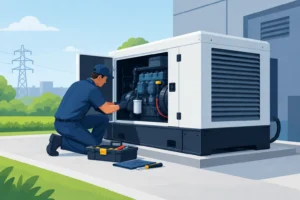
Routine maintenance typically includes checking engine oil and filters, inspecting the battery and charging system, reviewing fluid levels, examining electrical connections, and confirming that the generator exercises as scheduled. A trained technician can also identify warning messages, fuel-supply concerns, corrosion, rodent damage, or small issues before they become a no-start condition during a storm.
For commercial properties, a maintenance plan is also a matter of accountability. Property managers and business owners need to know who is responsible for monitoring the system, responding to alerts, arranging service, and documenting work. A professional service relationship provides a clear point of contact after installation, not just on the day the generator is installed.
Questions to Ask Before Buying a Commercial Generator
Before committing to a system, ask what must remain powered during an outage and what can be temporarily shut down. Ask how the generator will receive fuel, how long it can run under expected load, and whether automatic load management is appropriate. You should also ask who will coordinate permits, electrical work, fuel connections, startup, and ongoing maintenance.
It is wise to discuss future growth as well. A generator sized only for today’s equipment may become limiting if you add refrigeration, expand tenant space, install new HVAC equipment, or increase your technology needs. Planning for reasonable expansion can prevent an avoidable upgrade later.
Finally, look beyond the equipment price. The best value is a properly designed system with qualified installation and dependable service support. When utility power fails, the quality of those decisions becomes very clear.
A power outage may be unavoidable, but being unprepared is not. A commercial standby generator gives your business a practical way to protect people, property, inventory, and the service your customers count on – through hurricane season and every unexpected outage in between.