
When a hurricane, summer storm, or equipment failure takes down utility power, the difference between automatic versus manual generators becomes very real. One system can restore selected power while you are away, asleep, or focused on your family. The other requires someone to be home, set it up safely, start it, and manage what stays on.
Both options can serve a purpose. The right choice depends on how long you can tolerate an outage, what must remain powered, whether the property is occupied full-time, and how much responsibility you want to carry when conditions are difficult.
Automatic Versus Manual Generators: The Core Difference
A manual portable generator is moved into place when the power goes out. After positioning it outdoors, connecting approved cords or a properly installed inlet, checking fuel, and starting the unit, you choose which appliances or circuits to power. It is a flexible, lower-cost option for temporary, limited backup needs.
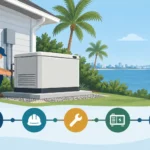
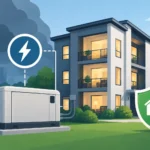
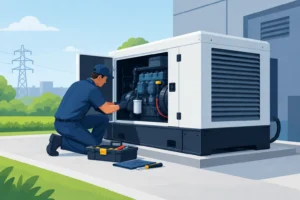
An automatic standby generator is permanently installed outside the home or business and connected to the electrical system through an automatic transfer switch. When the utility fails, the transfer switch detects the outage, starts the generator, and shifts designated circuits or the full electrical load to generator power. When utility service returns, the system transfers back and shuts down automatically.
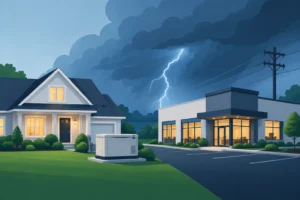
That response is more than a convenience during Gulf Coast weather. It can protect refrigerated food, keep a security system online, maintain internet connectivity, support a sump pump, and preserve climate control during a long outage. For many homeowners, it also means an elderly relative, a second home, or an unoccupied property is not left without critical power simply because no one is available to start a machine.
How Each Generator Performs During an Outage
Manual generators require action at the worst moment
A portable generator can be valuable after a short outage, especially when the goal is to run a refrigerator, a few lights, phone chargers, or a window air conditioner. But it depends on preparation and physical involvement.
Someone must bring it out, place it far from doors, windows, and vents, protect it from unsafe operating conditions, add fuel, start it, and connect loads correctly. During heavy rain, high winds, darkness, or extreme heat, those steps are not always simple. Fuel must also be stored safely and replenished, which can be difficult when local stations are closed or lines are long.
Portable units usually have limited output. Running a refrigerator and lights may be realistic, while central air conditioning, an electric water heater, an oven, a pool pump, and other large loads may exceed the generator’s capacity. Managing those limits takes attention.
Automatic standby generators respond on their own
An automatic system is designed for the moment utility power disappears. In many installations, it starts within seconds and begins supplying power after a brief transfer period. You do not need to locate extension cords, go outside in dangerous weather, or leave work early to protect the property.
Standby generators commonly operate on natural gas or propane, avoiding the repeated gasoline refueling associated with most portable models. The exact fuel arrangement and runtime depend on the property, generator size, fuel supply, and the electrical loads being served.
A properly designed standby system can power essential circuits or, when the home and generator capacity support it, provide whole-home coverage. That may include HVAC, refrigeration, lighting, garage doors, well pumps, security equipment, Wi-Fi, televisions, charging, and selected business equipment.
Cost Is More Than the Purchase Price
Manual generators cost less upfront. For a homeowner who needs occasional emergency power for a few basic items, that lower entry cost can make sense. There are also portable units that can be used at more than one location, which may appeal to someone with limited backup-power needs.
The trade-off is that the lower equipment price does not eliminate the ongoing work. You may need fuel containers, a safe storage plan, heavy-duty cords, weather-conscious operation, regular testing, oil changes, and a clear plan for connecting appliances without overloading the unit. An installed inlet and transfer equipment can improve safety and usability, but they add to the project cost.
Automatic standby generators require a larger investment because they involve generator sizing, a concrete or composite pad, electrical integration, transfer-switch installation, permits where required, fuel connection, startup testing, and professional commissioning. For businesses and homes where an outage has meaningful consequences, that investment can be easier to justify.
Consider the cost of lost refrigerated inventory, water damage, heat and humidity inside an unoccupied home, canceled business activity, security interruptions, or a family relocating during an extended outage. The best generator decision is not always the least expensive purchase. It is the solution that provides the level of protection your property actually needs.
Safety and Installation Matter
Generator safety deserves serious attention. Portable generators must never run in a garage, carport, enclosed porch, or near open windows and doors. Carbon monoxide is odorless and dangerous. They also must never be connected directly to a home electrical panel without approved transfer equipment, a practice that can endanger utility crews and damage electrical systems.
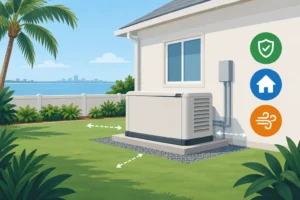
Automatic standby generators reduce several of these risks because they are permanently placed in an approved outdoor location and connected through purpose-built transfer equipment. They are not maintenance-free, however. They need proper clearances, correct fuel installation, periodic exercise, and professional service to remain ready.
For either type of generator, capacity planning matters. A generator should be selected based on the appliances and systems you expect to run, including the starting demands of motors in air conditioners, refrigerators, pumps, and commercial equipment. Buying based only on a generator’s advertised wattage can lead to disappointing performance when the outage arrives.
Which Option Fits Your Property?
A manual generator may be a practical choice if outages are usually brief, someone is consistently available to operate it, and your goal is limited emergency power. It can help bridge a short interruption without the expense of a permanent system.
An automatic standby generator is often the stronger fit for full-time residences, second homes, families with medical or comfort-related power needs, and properties in hurricane-prone areas. It is also well suited for businesses that depend on refrigeration, communications, security, point-of-sale systems, pumps, or customer access.
Property managers should pay particular attention to the automatic advantage. A portable generator cannot help if no authorized person can get to the building, operate it safely, and keep it fueled. A standby system provides protection even when the property is empty.
Plan the System Around What Cannot Go Dark
Before selecting a generator, make a practical list of what an outage would put at risk. Think beyond lights. At a Gulf Coast home, priorities may include central air conditioning, refrigeration, a well pump, internet, garage access, and security. At a business, the list may include refrigeration, network equipment, alarm systems, lighting, payment systems, and critical machinery.
Then consider the realities of the property: available fuel, electrical-panel capacity, local code requirements, placement space, noise considerations, and whether whole-home power or essential-circuit coverage makes more sense. A professional site assessment turns these questions into a system designed for the way you live or operate.
Jubilee Generator helps Baldwin County and Gulf Coast property owners evaluate these details, install automatic standby systems, and keep them maintained for the outages no one can schedule. When the forecast turns serious, the right time to decide how your property will stay powered is before the lights go out.