
A power outage can turn a well-maintained rental into an urgent problem in a matter of hours. Air conditioning stops during Alabama heat, refrigerators warm up, security systems go offline, and tenants or guests begin calling for answers. Rental property backup power gives owners a way to protect the property, the people inside it, and the income that depends on a dependable stay.
For long-term rentals, vacation homes, and multi-unit properties across Baldwin County, backup power is more than a convenience. It is a practical response to hurricane season, severe thunderstorms, utility interruptions, and the costly disruption that follows. A professionally installed automatic standby generator can restore power without requiring a tenant, guest, or property manager to haul out a portable unit or connect extension cords in bad weather.
Why outages create bigger risks for rental owners
An outage affects every property differently, but rental owners face a unique challenge: they may not be on-site when it happens. A homeowner can decide what to unplug, check the refrigerator, or find a hotel if necessary. A landlord or vacation-rental owner must communicate with tenants, protect the building, coordinate vendors, and preserve confidence in the property from a distance.
For a short-term rental, a multi-day outage can lead to canceled reservations, refunds, negative reviews, and guests leaving early. In a long-term rental, tenants may lose refrigerated food, internet access, climate control, and the ability to charge phones or run medical devices. If the property uses an electric well pump, sump pump, gate, or security equipment, the consequences can extend beyond comfort.
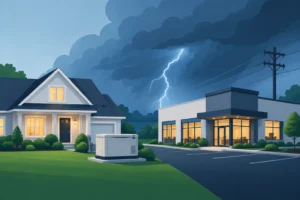
The Gulf Coast adds another layer of concern. Hurricanes and tropical weather can bring widespread utility damage, blocked roads, and outages that last longer than expected. A rental property that remains cooled, lit, secure, and connected is easier to manage during an already stressful event.
What rental property backup power can keep running
The right system depends on the building, electrical load, fuel source, and the owner’s priorities. Some rental owners choose essential-circuit coverage, while others want whole-home protection that allows the property to operate much as it normally would.
A properly sized standby generator may support critical systems such as HVAC equipment, refrigeration, lighting, internet equipment, security systems, garage doors, well pumps, and device charging. For vacation rentals, maintaining air conditioning, hot water, kitchen refrigeration, Wi-Fi, and basic lighting can make the difference between an uncomfortable stay and a manageable weather interruption.
Whole-home coverage is often a strong fit for higher-value rentals, larger homes, or properties marketed around premium amenities. However, it is not the only sensible option. If a property has a limited budget or a smaller electrical service, prioritizing essential circuits can still provide meaningful protection. The goal is not to power every possible appliance at any cost. It is to keep the systems that protect the building and keep occupants safe and reasonably comfortable.
Automatic standby generators reduce the management burden
An automatic standby generator monitors incoming utility power. When an outage occurs, the system starts automatically and transfers the home or building to generator power. When utility service returns, it transfers back and shuts down safely.
That automatic response matters for rental properties. Tenants do not need to understand generator operation. Guests do not need access to equipment. Property managers do not need to drive across town in a storm to start a portable generator. The system is designed to respond even if no one is at the property.
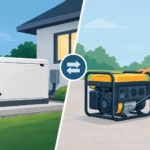
Portable generators can have a place for temporary, limited use, but they require fuel handling, manual setup, outdoor placement, and careful cord management. They also create safety concerns when operated incorrectly. For an owner seeking dependable, hands-off outage protection, a permanently installed standby system is the more practical long-term solution.
Choosing the right generator for a rental property
Generator selection should begin with the property, not a guess based on square footage alone. Electrical loads vary widely. A small coastal condo, a three-bedroom long-term rental, and a large beach house with multiple HVAC systems have very different backup-power needs.
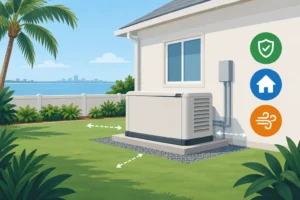
A professional assessment considers the electrical panel, major appliances, HVAC demand, pumps, desired circuits, and whether natural gas or propane is available. It also accounts for the property’s local installation requirements and a safe generator location. In coastal Alabama, equipment placement and installation quality matter because systems must stand up to heat, humidity, heavy rain, and storm conditions.
Fuel availability is another key decision. Natural gas can offer continuous fuel supply where service is available and remains active during an outage. Propane is a dependable option for properties without natural gas access, but tank size and fuel planning should match expected runtime and generator capacity. An experienced installer can explain the trade-offs clearly before equipment is selected.
Brand matters, but installation and service matter just as much. Generac standby generators are widely trusted for automatic home backup power, and professionally installed systems can be tailored to essential-load or whole-property coverage. Owners with existing Kohler, Cummins, or Briggs & Stratton equipment also need a service partner who understands how to keep their system ready when it is needed.
Protect the property, not just the guest experience
Reliable backup power helps preserve rental income, but its value goes beyond reviews and occupancy. It can reduce the risk of heat and humidity damage inside an unoccupied home, especially when a property sits vacant between bookings or during the off-season.
Without power, indoor humidity can climb quickly. That can contribute to moisture issues, musty odors, and strain on finishes and furnishings. Refrigerators and freezers can spoil, security cameras may stop recording, and smart locks or Wi-Fi-connected property systems can become difficult to manage remotely.
Backup power also supports faster recovery after a storm. When the property has lights, climate control, and connectivity, owners and managers can inspect conditions, communicate with occupants, and coordinate repairs more effectively. That can be especially valuable when local contractors and restoration services are in high demand.
Installation should be handled by qualified professionals
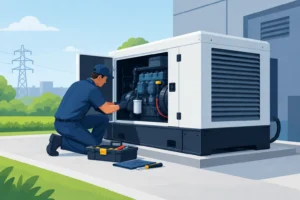
A standby generator is not simply a piece of equipment placed outside. It must be connected safely to the electrical system through an automatic transfer switch, installed according to applicable codes, supplied with an appropriate fuel source, and tested for proper operation.
For rental owners, professional installation also helps avoid preventable liability concerns. Improper connections, undersized equipment, poor fuel planning, or unauthorized tenant access can create safety problems when the property is under pressure. A turnkey installation gives the owner one coordinated process instead of separate electrical, fuel, equipment, and startup responsibilities.
Jubilee Generator serves Baldwin County property owners with consultation, generator selection, installation, electrical-panel integration, automatic transfer functionality, and ongoing service. That local support is particularly valuable when you own a rental from out of town or manage several properties with different power needs.
Maintenance keeps protection ready
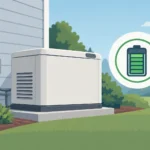
A generator that has not been maintained is not a dependable emergency plan. Standby systems need periodic inspections, oil and filter service, battery checks, exercise testing, and attention to fuel supply and transfer-switch operation.
Maintenance is especially important for rentals because an owner may not notice a warning light or a failed weekly exercise cycle right away. A scheduled service plan helps identify issues before hurricane season or a major weather event puts the system to the test. It also gives owners a clear record of care for an asset that protects both the building and its revenue.
Consider tenant communication before the next outage
Backup power works best when tenants and property managers know what to expect. Lease documents and guest information should explain that the generator operates automatically, identify any limits on what it powers, and make clear that occupants should not tamper with the equipment.
For short-term rentals, it can be helpful to explain that the system is there to maintain essential service during an outage, not necessarily to support every high-demand appliance at once. For long-term tenants, provide a simple contact process for reporting generator alarms, unusual noise, or any concern after a storm.
A dependable rental is built long before the weather forecast turns serious. Choosing backup power now gives your tenants or guests one less reason to worry when the lights go out – and gives you a property that is better prepared to keep serving them.