
A power outage can turn an ordinary business day into a costly emergency within minutes. This business outage preparedness guide is built for Gulf Coast operators who need to protect their people, property, inventory, and customer relationships when utility power fails. Whether the cause is a hurricane, summer storm, vehicle accident, or grid issue, the right plan gives your business a clear response instead of a scramble.
For many local businesses, electricity is not just a convenience. It keeps point-of-sale systems running, refrigeration cold, security systems active, doors operating, phones connected, and customers informed. A standby generator cannot prevent every disruption, but it can keep a temporary outage from becoming a major operational loss.
Start With What an Outage Could Cost
Before choosing equipment or writing a response plan, identify what is at risk when the power goes out. The answer is different for every operation. A restaurant may be focused on refrigeration and food safety. A medical office may need to protect records, medications, and essential equipment. A retail store may need lights, payment processing, and security. An office may need internet access, servers, HVAC, and communications to keep employees productive.
Consider both the immediate cost and the cost of being unavailable. Lost sales are easy to see, but spoiled inventory, emergency cleanup, overtime, canceled appointments, damaged equipment, and customer frustration can carry an even longer impact. During widespread storms in Baldwin County, customers remember which businesses were prepared to serve them.
This evaluation also helps establish priorities. Not every circuit in your building must be powered during an outage. Many businesses can protect their most important functions by identifying essential loads first, then sizing a backup power system around those needs.
Build Your Business Outage Preparedness Guide Around Priorities
A useful outage plan should be simple enough that your staff can follow it under pressure. It should name the people responsible for decisions, explain how employees communicate, and identify which systems must stay on.
Start by separating critical systems from systems that can wait. In most commercial settings, priorities fall into five areas:
- Life safety systems, including emergency lighting, exit access, alarms, and required equipment.
- Security, such as cameras, monitored alarms, access controls, gates, and exterior lighting.
- Operations, including computers, internet service, phones, point-of-sale equipment, and key machinery.
- Inventory protection, especially refrigeration, freezers, temperature-sensitive products, and sump pumps.
- Customer service, including lighting, restrooms, checkout capability, and a comfortable environment when practical.
The order matters. Your business may want whole-building coverage, or it may be better served by a system designed around selected critical circuits. The right choice depends on the size of the building, available fuel source, electrical demand, budget, and how long your operation must remain open during an outage.
Assign Clear Roles Before the Storm
A preparedness plan is only as useful as the people carrying it out. Designate an outage lead and a backup person who can make decisions if the owner or manager is unavailable. Give key employees a written copy of shut-down procedures, customer communication steps, and emergency contact information.
Make sure staff know what they should not do. Employees should never attempt to operate electrical equipment they are not trained to handle, run portable generators indoors or near doors and vents, or make rushed changes to electrical panels. Professional installation and a properly designed automatic system reduce those risks.
It also helps to create a customer communication plan before you need it. Prepare a short message for voicemail, social channels, and front-door signage. Let customers know whether you are open, operating with limited services, or temporarily closed. Clear updates protect trust when conditions are unpredictable.
Choose Backup Power That Matches Your Operation
Portable generators can serve a limited role for certain temporary needs, but they require manual setup, safe fuel handling, extension cords, and someone on site to start and manage them. They may be appropriate for a small, short-term load, but they are not the same as dependable business continuity power.
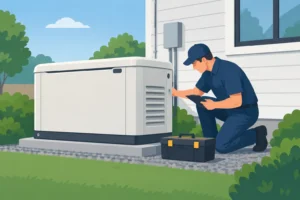
An automatic standby generator is permanently installed outside your building and connected through an automatic transfer switch. When utility power fails, the transfer switch detects the interruption, starts the generator, and moves selected electrical loads to backup power. When utility service returns, the system transfers back and the generator shuts down safely.
That automatic response matters when outages happen overnight, while staff are away, or during severe weather. It can protect refrigeration, security, network equipment, and other essential loads without relying on someone to reach the property and connect equipment in dangerous conditions.
Professional load planning is essential. An undersized generator may not support the systems you need, while an oversized unit can add unnecessary expense. A qualified contractor reviews your electrical service, starting loads, fuel availability, local permitting requirements, and desired coverage to recommend the right system. For businesses across Baldwin County and Alabama’s Gulf Coast, Jubilee Generator provides that full-service process, from consultation and generator selection through installation, automatic transfer integration, and ongoing maintenance.
Protect the System With Maintenance and Testing
Backup power is only dependable when it is maintained. A generator that sits unused for years may not perform as expected when a hurricane or severe storm arrives. Routine service helps identify battery issues, low fluid levels, worn parts, error codes, and fuel-related concerns before they become an outage-day problem.
Your maintenance schedule should follow the generator manufacturer’s recommendations and reflect how critical the equipment is to your operation. Commercial systems often benefit from regular professional inspections, load testing when appropriate, and documented service records. If your business is subject to insurance, health, safety, or industry requirements, those records can be especially valuable.
Do not overlook fuel planning. Natural gas can provide continuous fuel where service remains available, while propane offers a dependable on-site fuel option when properly sized. The better choice depends on your location, utility infrastructure, generator size, expected runtime, and local conditions. A contractor can help you evaluate those trade-offs instead of making a decision based on price alone.
Test the Plan, Not Just the Generator
A monthly generator exercise is useful, but it does not replace a real business preparedness review. At least once a year, walk through an outage scenario with your team. Confirm that employee contact information is current, emergency supplies are available, critical equipment is identified, and managers know how to communicate with customers and vendors.
Test the practical details. Can your staff process transactions if the internet connection changes? Are refrigerator temperature logs accessible? Do security systems remain active on backup power? Is the generator area clear of stored materials, landscaping debris, and flood hazards? These questions reveal gaps while there is still time to correct them.
Plan for the First Hours After Power Returns
Restored utility power does not always mean business is immediately back to normal. Check refrigerated inventory, restart equipment in the proper order, review alarm and security notifications, and inspect the property for water intrusion or storm damage. If your generator ran for an extended period, schedule a service review as recommended.
Document what worked and what did not. Maybe your essential-load plan was exactly right. Maybe a network component, gate operator, or additional cooling circuit should be included next time. Each outage provides useful information that can improve your protection before the next storm season.
Power You Can Count On starts with preparation that fits your property and the way you operate. When your essential systems have a plan, your team can focus less on the outage and more on serving the people who depend on your business.