
A storm does not need to make landfall to put your property in the dark. High winds, fallen limbs, flooding, and damaged utility equipment can interrupt power across Baldwin County for hours or days. Thoughtful outage backup planning gives your family or business a clear answer before that happens: what needs power, how long it needs to run, and what system will take over when the grid goes down.
For Gulf Coast property owners, backup power is about more than keeping lights on. It protects refrigerated food and medications, helps prevent humidity-related damage, keeps security systems and internet connected, and allows everyday life to continue with far less disruption. For a business, it can mean the difference between reopening quickly and losing inventory, communication, and customer confidence.
Start Outage Backup Planning With Your Priorities
The right generator is not simply the largest unit that fits outside the home. It is the system designed around the loads that matter most to you. A retired couple in Fairhope may prioritize central air conditioning, refrigeration, lighting, Wi-Fi, and medical equipment. A second-home owner in Orange Beach may need climate control, sump pumps, security, and remote access protected while they are away. A restaurant, office, or retail property may need refrigeration, point-of-sale systems, network equipment, and selected lighting to stay operational.
Begin by considering what an outage changes at your property. Ask which systems protect health and safety, which systems prevent expensive damage, and which systems allow your household or business to function normally. That conversation creates a practical starting point for generator sizing.
A professional assessment should account for more than the appliances you can see. Central HVAC systems, well pumps, pool equipment, electric water heaters, kitchen appliances, and motors can require substantial power when they start. Running watts alone do not tell the full story. Proper planning considers starting loads, electrical panel capacity, fuel source, and whether you want whole-property coverage or carefully selected circuits.
Decide Between Essential Loads and Whole-Home Power
There is no one correct backup approach. The best choice depends on the property, the budget, and how you want to live during an extended outage.
An essential-load system supports the circuits you choose in advance. This may include refrigeration, lighting, outlets, communications, a garage door, and a few key appliances. It can be an effective option for homeowners who want dependable protection for the basics while keeping the project scope focused.
A whole-home standby system is built for greater continuity. Depending on the generator size and the home’s electrical demand, it can support central air conditioning and most or all normal household functions. For families with young children, older relatives, work-from-home needs, or a second property that must remain protected, that added coverage can bring meaningful peace of mind.
Commercial planning follows the same principle, but the stakes may be different. A small office may only need connectivity, lighting, and security. A business with refrigerated inventory or customer-facing operations may need broader coverage. The goal is not to power every circuit automatically just because it is available. It is to protect the systems that keep the operation safe, productive, and ready to recover.
Choose Automatic Backup Power, Not a Storm-Day Chore
Portable generators can serve a purpose for limited, short-term needs, but they place responsibility on the owner when conditions may already be difficult. They require safe outdoor placement, fuel handling, extension cords or approved connections, and manual startup. They should never be operated in a garage, enclosed area, or near doors and windows because of carbon monoxide risk.
An automatic standby generator is permanently installed outside the home or business and connected to the electrical system through an automatic transfer switch. When utility power fails, the transfer switch detects the interruption, starts the generator, and shifts designated power to the backup system. When utility service returns, it transfers the property back and allows the generator to shut down after its cooldown cycle.
That automatic response matters during a nighttime outage, an evacuation, or a storm when you are not at the property. It also matters for owners who do not want to make fuel runs or handle electrical equipment in bad weather. A standby system is designed to respond even when no one is home to intervene.
Fuel Planning Is Part of the Backup Plan
A generator can only provide power if it has a dependable fuel supply. In many Gulf Coast installations, natural gas is a convenient choice because it provides continuous fuel service without on-site refueling. Where natural gas is not available or does not meet the project’s needs, propane can provide an effective alternative with properly sized storage.
Fuel decisions should reflect the expected duration of outages, the size of the generator, local availability, and the property layout. A generator contractor can coordinate the requirements of the generator, fuel connection, electrical work, and local permitting so the system functions as a complete installation rather than a collection of separate decisions.
It is also wise to consider what happens after several days without utility power. Will the generator be carrying air conditioning around the clock? Are there load-management options that can reduce demand by prioritizing major appliances? These details can affect equipment selection and operating expectations.
Plan for Professional Installation From the Beginning
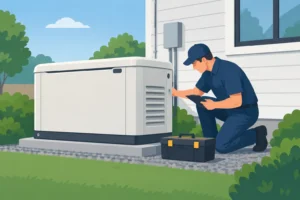
A standby generator is a permanent power system, not an appliance you set beside the house. Safe installation requires site selection, a stable base, proper clearances, electrical-panel integration, transfer switch installation, fuel connection, permits, and inspection requirements where applicable.
Placement needs careful attention. The generator must be accessible for service while remaining outside at required distances from openings, vents, and other structures. Gulf Coast weather adds another consideration: equipment should be positioned with drainage, salt air exposure, wind, and local property conditions in mind.
Professional installation also protects the rest of your electrical system. The transfer switch prevents generator power from feeding back onto utility lines, a dangerous condition for utility crews and equipment. It ensures the property changes safely from utility service to generator power and back again.
Jubilee Generator helps property owners move from a load assessment to installation, startup, and ongoing service, with experience supporting Generac systems as well as Kohler, Cummins, and Briggs & Stratton equipment. The value of a turnkey approach is simple: you have one knowledgeable team helping make sure the generator, transfer equipment, fuel plan, and electrical system work together.
Keep Your Backup System Ready Between Storms
Outage backup planning does not end once the generator is installed. Like any mechanical system, a standby generator needs regular attention to remain ready for the moment it is needed.
Most units exercise automatically on a scheduled basis, but an exercise cycle is not a substitute for maintenance. Service typically includes checking the battery, oil, filters, spark plugs as required, fluid levels, connections, error codes, and overall operation. The exact schedule varies by generator model, age, run hours, and manufacturer requirements.
Property owners should also keep the area around the generator clear. Do not allow leaves, stored items, landscape growth, or debris to restrict airflow or block service access. After severe weather, inspect the exterior area from a safe distance and contact a qualified technician if the unit shows damage, alarms, or unusual operation.
For businesses and second-home owners, scheduled maintenance provides another benefit: accountability. A documented service plan makes it easier to confirm that the system has been inspected before hurricane season and that any concerns are handled before an outage tests the equipment.
A Better Question to Ask Before Hurricane Season
Instead of asking, “What size generator should I buy?” ask, “What cannot be allowed to stop at my property?” That answer may include air conditioning during dangerous heat, a refrigerator storing medication, a security system, a home office, a well pump, or the equipment that keeps a local business serving its customers.
Once those priorities are clear, the right backup plan becomes much easier to build. A properly selected and maintained automatic standby generator does not change the weather. It gives you a dependable way to protect the people, property, and work that matter when the weather does its worst.