
A power outage on the Alabama coast is rarely just an inconvenience. It can mean a hot home without air conditioning, food warming in the refrigerator, a security system going offline, or a business losing the ability to serve customers. Reliable Gulf Coast generator service helps make sure your standby system is prepared to respond when utility power does not.
A whole-home or commercial standby generator is designed to start automatically, but it still needs professional attention to perform as intended. Like any engine-powered system, it depends on regular inspection, clean connections, proper fuel supply, battery health, and controls that communicate correctly with the automatic transfer switch. Service is what turns a generator from equipment sitting beside the building into power you can count on.
Why Gulf Coast Generator Service Matters
Gulf Coast weather places unique demands on backup power systems. Hurricane season brings the possibility of extended outages, while thunderstorms, high winds, heavy rain, humidity, and coastal salt air can affect equipment throughout the year. A generator that has not been inspected may not reveal a problem until it is asked to carry a real load during an outage.
Routine service gives a trained technician the chance to identify concerns before they become urgent. That may include a weak battery, an aging air filter, low oil, corrosion at a connection, a fault code in the controller, or a transfer switch issue. Small maintenance needs are usually far easier to address during a scheduled visit than during a storm-related service call.
For homeowners in Daphne, Fairhope, Spanish Fort, Gulf Shores, Orange Beach, Loxley, Bay Minette, and nearby communities, this is about protecting everyday life. Your system may support essential circuits or provide whole-home coverage, depending on its design. Either way, the goal is the same: keep the property safer, more comfortable, and more functional when the grid is down.
What Professional Generator Service Should Include
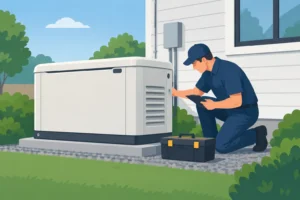
A professional visit should involve more than starting the generator and listening to it run for a few minutes. A qualified technician evaluates the condition of the system and verifies that its major components are working together.
During a typical maintenance appointment, service may include an oil and filter change when required by the manufacturer’s schedule, inspection of the battery and charging system, air filter review, spark plug evaluation, and a check for leaks, damage, or corrosion. The technician should also review diagnostic history and controller settings, inspect wiring and connections, and test automatic operation with the transfer equipment.
The transfer switch is particularly important. It is the component that senses the utility outage, signals the generator to start, and safely shifts the building’s electrical load to backup power. When utility service returns, it transfers the load back and allows the generator to cool down before shutting off. A generator can be mechanically sound but still fail to protect the building if this sequence is not functioning correctly.
Load testing may also be appropriate based on the generator, property, and service findings. This confirms that the system can carry the electrical demand it was designed to support. A careful technician will consider the system’s rated capacity rather than assume every appliance and circuit should run at once.
Maintenance and Repair Are Not the Same Thing
Scheduled maintenance is preventive. It follows manufacturer recommendations and focuses on keeping the system in operating condition. Repair is needed when a component has failed, the unit displays an alarm, the generator will not exercise properly, or the transfer switch is not responding as it should.
Both matter, but regular maintenance can reduce the chance of a surprise repair. It cannot eliminate every mechanical or electrical issue, especially as equipment ages. The practical advantage is early detection, clear documentation, and time to make a thoughtful decision instead of reacting under pressure after the lights go out.
Signs Your Generator Needs Attention
Do not wait for the next hurricane warning to find out whether your system needs service. If your generator has not received professional maintenance in the past year, scheduling an inspection is a smart first step. You should also call for service if the unit will not complete its scheduled exercise cycle, shows an alert or warning light, makes unusual noises, leaks fluids, or has trouble starting.
Changes in the transfer process also deserve attention. If power returns but the generator continues to run unusually long, if certain expected circuits are not receiving backup power, or if the system does not start when utility power is interrupted, the issue may involve the generator, transfer switch, fuel source, or electrical connections. These systems should be evaluated by a trained professional rather than treated as a do-it-yourself electrical project.
Homeowners with propane systems should remember that fuel availability is part of readiness. Natural gas systems also depend on a properly sized and functioning gas supply. A service provider can help identify generator-side concerns, while fuel suppliers and licensed gas professionals may be needed when the issue involves the fuel infrastructure itself.
Service Before Hurricane Season Gives You Options
The best time to service a standby generator is before severe weather is in the forecast. Once a named storm is approaching the Gulf, service schedules fill quickly and replacement parts may be harder to obtain. Planning ahead gives you time to address a battery replacement, repair a controller issue, arrange fuel delivery, or discuss whether your current system still fits the property’s needs.
A pre-season review is especially valuable for second-home owners and property managers. If a property sits vacant part of the year, an automatic standby generator can protect refrigeration, climate control, security, internet equipment, and other critical systems. But automatic operation only helps when the equipment has been maintained and the property’s electrical priorities are still correctly configured.
Commercial properties have additional considerations. Restaurants, offices, retail locations, medical-related facilities, and service businesses may depend on refrigeration, point-of-sale systems, communications, lighting, security, or specific equipment. The right service plan should account for how the business uses backup power and whether changes to the building have added demand since the generator was installed.
Choosing a Gulf Coast Generator Service Partner
Generator service is not just engine work. It combines mechanical knowledge, electrical expertise, transfer-switch testing, manufacturer requirements, and familiarity with local conditions. Choose a provider that can explain what they find in plain language and provide support beyond the initial installation.
It also helps to work with a company experienced across generator brands. Generac is a leading choice for automatic standby power, but properties may also have Kohler, Cummins, or Briggs & Stratton equipment. Brand-specific diagnostics, parts requirements, and maintenance schedules can vary, so the technician should understand the system installed at your home or business.
Jubilee Generator provides full-service standby power support for Baldwin County and the Alabama Gulf Coast, from consultation and professional installation to ongoing maintenance and repair. As a certified Generac dealer, the team can help customers maintain existing systems and make informed decisions when an older unit no longer provides the coverage or reliability a property requires.
Keep Readiness Simple
You do not need to become a generator expert to protect your property. Keep the area around the unit clear, watch for alerts, confirm that any required fuel arrangements are current, and schedule professional maintenance on a consistent basis. Avoid opening electrical panels, bypassing alarms, or attempting repairs that involve fuel or high-voltage connections.
When the next outage arrives, the best outcome is uneventful: the power drops, the generator starts, and your home or business continues with far less disruption. A scheduled service visit today can help make that quiet confidence possible when the weather turns.