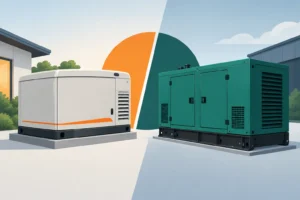

A generator can have an impressive number on the brochure and still be the wrong fit for your property. That is why understanding standby generator ratings matters before installation. The right rating is not simply the largest unit you can buy. It is the unit that can start and carry the electrical loads your home or business depends on during an Alabama Gulf Coast outage.
For some properties, that means keeping refrigeration, lights, internet, security, and a few essential circuits running. For others, it means operating central air conditioning, well pumps, elevators, commercial refrigeration, point-of-sale equipment, or an entire home without changing daily routines. A professional evaluation turns those needs into a generator system you can count on.
The kW Rating Is the Starting Point
The rating most homeowners notice first is kilowatts, written as kW. This is the amount of real electrical power a standby generator can produce. A 22 kW generator, for example, can supply up to 22,000 watts under its rated conditions.
That number is useful, but it does not answer the full sizing question. Every property has a different combination of electrical loads. A coastal home with one air conditioner and natural gas appliances may need a very different solution than a large home with two HVAC systems, electric heat, a pool pump, and an electric range.
A generator must handle both running watts and the extra power required when certain equipment starts. Air conditioners, refrigerators, pumps, and some commercial motors can draw a much higher starting load for a brief moment. If the generator is too small, it may struggle when these loads cycle on, even if its kW rating appears to cover the normal running demand.
That is why a load calculation is more reliable than choosing a generator based on square footage alone. Square footage can offer a rough reference point, but it cannot account for the equipment installed in your home or business.
Standby Ratings Are Not Prime Power Ratings
The word “standby” has a specific meaning in generator ratings. A standby-rated generator is designed to provide emergency power when utility service fails. It is intended for intermittent use during outages, not as the everyday primary source of electricity.
This is the right category for most whole-home backup systems and many businesses connected to the utility grid. The generator sits ready, monitors incoming power, starts automatically when an outage occurs, and transfers the property to generator power through an automatic transfer switch.
Prime power generators serve a different purpose. They are built for locations where a generator may run for long periods as the main power supply, such as remote job sites or off-grid operations. A unit can have different ratings depending on whether it is being used for standby, prime, or continuous service. Comparing models without checking the duty classification can lead to an inaccurate comparison.
For Gulf Coast homeowners, the practical question is simple: Will the unit reliably carry your selected loads through a storm-related outage? For a business, the question may be broader: Can it protect inventory, maintain security, keep communications available, and support safe operations until utility power returns?
Voltage, Phase, and Amps Must Match the Property
Most homes in Baldwin County use 120/240-volt, single-phase electrical service. The generator and transfer equipment must be designed to work with that service. This allows the system to power standard household circuits as well as larger 240-volt equipment such as central air conditioners, electric water heaters, dryers, and pumps when they are included in the load plan.
Commercial properties may use 120/208-volt or 277/480-volt three-phase service. Three-phase power is common in larger HVAC equipment, motors, restaurants, retail spaces, and other commercial applications. A generator with the wrong voltage or phase cannot simply be substituted because its kW rating looks adequate.
Amperage matters, too. Your service entrance, electrical panel, and transfer switch each have amp ratings that affect system design. A 200-amp home does not automatically require a generator capable of powering every circuit at once. It does mean the transfer switch and installation must be properly selected and integrated for the property’s electrical system.
A whole-house transfer switch can manage all circuits, while a selected-circuit approach powers only designated essentials. Neither option is automatically better. The right choice depends on your expectations during an outage, your budget, and the loads that need protection.
What Should Stay On During an Outage?
The most useful standby generator ratings are the ones that support real-life decisions. Before selecting a unit, consider what power loss would disrupt first. In a home, that often includes:
- Central heating and air conditioning
- Refrigerators and freezers
- Lights, internet, televisions, and device charging
- Well pumps, sump pumps, garage doors, and security systems
- Medical equipment and essential appliances
For a business, the priorities may include refrigeration, network equipment, lighting, security, phone systems, customer transactions, or critical machinery. A property manager may need to protect common-area lighting, gate access, elevators, pumps, and communications.
This exercise often reveals the trade-off between an essential-load system and a whole-home or whole-building solution. An essential-load generator can be a practical investment when the goal is basic comfort and protection. A larger system offers more freedom during an extended outage, particularly when hurricane recovery makes travel, fuel access, and temporary relocation difficult.
Fuel Type Affects Real-World Performance
Generator output is only valuable if the unit has reliable fuel. Residential standby generators commonly operate on natural gas or propane. Natural gas offers the convenience of a utility supply where available. Propane can be an excellent option for properties without natural gas service, but tank size and fuel planning deserve careful attention.
A generator’s published fuel-consumption figures show how much gas or propane it uses at different load levels. Those numbers matter when estimating runtime and operating cost. A generator running at 25 percent load does not consume fuel at the same rate as one working near its maximum capacity.
During a prolonged outage, a properly sized generator may provide better fuel efficiency than an oversized unit that spends most of its time lightly loaded. On the other hand, sizing too close to the expected load leaves little room for starting surges or future additions. The goal is a balanced design, not simply the highest number.
Noise Ratings Matter in Close Neighborhoods
Sound ratings are commonly expressed in decibels, or dB. Lower numbers indicate a quieter generator, but published sound levels should be compared carefully. The distance from the unit, enclosure design, load level, and installation location all affect what you hear from the home, patio, or neighboring property.
This is particularly relevant in neighborhoods around Fairhope, Daphne, Spanish Fort, Gulf Shores, and Orange Beach, where homes may be close together and outdoor living space is part of daily life. Local placement requirements, airflow needs, fuel connections, and clearance from windows and openings must all be considered alongside noise.
A properly installed standby generator should be positioned for safe operation and service access, not simply placed wherever there is open space. Professional site planning helps avoid costly changes later.
Why Transfer Switch Ratings Deserve Attention
The automatic transfer switch is the part of the system that detects a utility failure, starts the generator, and safely transfers electrical loads to backup power. It is not an optional accessory. It is central to automatic operation.
Transfer switches have voltage and amp ratings that must match the electrical service and generator system. They may also include load-management features that help prevent too many large appliances from starting at once. For example, the system may prioritize one air conditioner before allowing another large load to run.
Load management can make a smaller generator work effectively for a property with several high-demand appliances. It does require thoughtful planning. If a homeowner expects every major appliance and every HVAC system to operate at the same time, the generator and switch must be designed for that expectation.
Read Ratings With Gulf Coast Conditions in Mind
Heat, humidity, salt air, heavy rain, and hurricane conditions are part of life along Alabama’s coast. Generator ratings are tested under defined conditions, but installation quality and maintenance help determine how well the system performs when weather turns severe.
The enclosure, foundation or mounting pad, electrical connections, fuel supply, and drainage all deserve attention. So do routine inspections, battery checks, oil and filter service, and scheduled exercise cycles. A standby generator that has not been maintained is less likely to deliver the confidence its rating suggests.
Jubilee Generator helps property owners translate generator specifications into a complete backup-power plan, including equipment selection, professional installation, automatic transfer capability, and continued service. The goal is not to leave you comparing spec sheets alone. It is to make sure the system is ready when the grid is not.
When you are evaluating a generator, bring a clear list of the comforts, systems, and operations you refuse to lose in an outage. That list is where the right rating begins – and where dependable power becomes a practical plan instead of a guess.