
A power outage on the Alabama Gulf Coast is rarely a minor inconvenience. It can mean a hot house with no air conditioning, food beginning to spoil, a sump or well pump sitting idle, security systems offline, and no reliable way to receive weather updates. When weighing a standby generator versus solar batteries, the right choice comes down to what must keep running, how long an outage may last, and how much certainty you want when severe weather arrives.
Solar batteries can be a valuable part of an energy plan. But for many Baldwin County homes and businesses facing hurricane-related outages, an automatic standby generator provides the more dependable path to whole-property backup power.
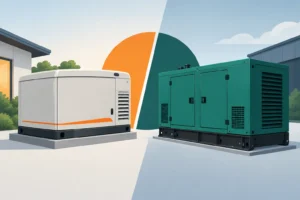
Standby Generator Versus Solar Batteries: The Core Difference
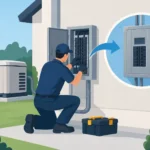
A standby generator creates electricity at your property using a fuel source, typically natural gas or propane. It is permanently installed outside the home or business and connected to an automatic transfer switch. When utility power fails, the system detects the interruption, starts automatically, and transfers the electrical load to generator power within seconds.
Solar batteries store electricity produced by solar panels or, in some cases, electricity purchased from the grid. During an outage, a properly designed battery system can power selected circuits or portions of a building. The battery has a fixed amount of stored energy, however, and its ability to recharge depends on available sunlight, solar array capacity, and system design.
That difference matters during a Gulf Coast storm. A generator can continue running as long as it has fuel. A battery begins drawing down the moment the grid goes out.
What Happens During a Long Outage?
A short outage is where solar batteries can look especially appealing. If the goal is to keep a refrigerator, a few lights, internet equipment, and device chargers running for several hours, a battery may be sufficient. A carefully managed battery system can provide quiet, immediate power for essential loads.
Longer outages change the calculation. Air conditioning, electric water heaters, well pumps, pool equipment, large refrigerators, freezers, and commercial refrigeration consume significant power. Running those loads from batteries can drain stored energy quickly. Recharging may take time, and storm clouds, rain, debris, or damaged panels can limit solar production when you need it most.
An automatic standby generator is designed for sustained backup. With natural gas service, many homes have an ongoing fuel supply without needing to refuel during an outage. Propane systems can also support extended operation when the tank is properly sized. For homeowners who leave town during hurricane season or operate a second home, that automatic, fuel-supported operation offers meaningful peace of mind.
What Can Each System Power?
The answer depends on the size of the system and the priorities set during design. Neither technology should be selected based on a generic online estimate alone. Your electrical panel, fuel availability, HVAC equipment, essential appliances, and desired level of coverage all matter.
A solar battery installation often focuses on critical-load backup. That may include refrigeration, lighting, internet, outlets, a garage door opener, and possibly a small HVAC system. Power-hungry appliances are commonly excluded or managed carefully to protect battery runtime.
A properly sized whole-home standby generator can support far more of the property, including central air conditioning, refrigerators, freezers, security equipment, lighting, internet, medical devices, and other daily essentials. Some homes can power nearly everything; others use load management to prioritize the most important circuits. For businesses, a generator can protect refrigeration, point-of-sale systems, communications, lighting, security, and operational equipment based on the facility’s needs.
The practical question is not simply, “Can it provide backup power?” It is, “Will it keep my home or business operating the way I need it to during a real outage?”
Automatic Operation Is a Major Advantage
Both battery and generator systems can be configured to respond automatically, but standby generators are built around this purpose. The transfer switch continuously monitors incoming utility power. When the grid fails, the generator starts, power transfers, and the system returns to utility service once stable power is restored.
There is no extension cord to run, no portable unit to wheel outside, and no decision to make in the middle of heavy rain or a nighttime outage. That is particularly important for older homeowners, second-home owners, and business operators who may not be on site when an outage begins.
Solar batteries can also transition automatically, but homeowners should understand the limitations of standard solar panels. Most grid-tied solar systems shut down during an outage unless they are paired with battery storage and outage-capable equipment. Solar panels alone do not keep a home powered when the utility grid goes down.
Cost, Maintenance, and Lifespan
Solar batteries and standby generators are both substantial investments, and each has different cost factors. A solar-plus-battery system may require panels, batteries, inverters, electrical upgrades, critical-load panel work, and specialized design. Expanding backup capacity can mean adding more batteries and, in some cases, more solar generation.
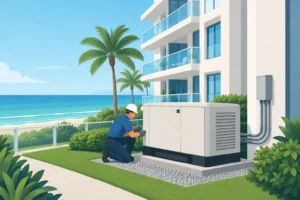
A standby generator requires the generator itself, a transfer switch, electrical integration, permits, placement planning, fuel connection, and professional installation. The final cost varies based on generator size, distance from the electrical and gas service, code requirements, and the loads you want covered.
Battery systems generally need less routine mechanical maintenance, but batteries have a finite service life and may eventually require replacement. Their capacity can also decline over time. Standby generators need scheduled maintenance because they have an engine, fuel system, and moving parts. That maintenance is not a drawback when it is planned and handled by qualified professionals. It is how the system remains ready for the day it is needed.
For either option, the lowest initial quote is not always the best value. Reliable backup power depends on proper sizing, safe installation, code compliance, and service after the installation is complete.
When Solar Batteries Make Sense
Solar batteries may be a strong fit for a homeowner who wants to reduce grid dependence, has modest critical-load needs, experiences mostly brief outages, and is comfortable actively managing electricity use during an extended event. They can also complement a broader solar strategy and provide quiet backup for carefully selected equipment.
They are less likely to be the best standalone answer for a property that needs central cooling, broad whole-home coverage, or dependable multi-day operation through cloudy storm conditions. The larger the electrical demand, the more battery capacity and solar production are required.
When a Standby Generator Is the Better Fit
A standby generator is often the practical choice for Gulf Coast properties that cannot afford to wait for the sun or ration power during an outage. It is especially well suited for homes with central HVAC, families with medical or comfort needs, homes with refrigerated food and freezers, and businesses that rely on refrigeration, connectivity, security, or customer service.
It also makes sense for property owners who want protection that operates without intervention. With professional design, an automatic transfer switch, and a properly sized fuel supply, the generator becomes a permanent part of the property’s emergency plan rather than another task to manage during a storm.
Jubilee Generator helps property owners evaluate actual electrical needs, choose the right standby system, complete the installation, and maintain it for dependable performance year after year.
Choose for the Outage You May Actually Face
The best backup system is not necessarily the one with the most appealing brochure or the lowest upfront price. It is the one that protects the loads you depend on for as long as you may need them. For a few essential circuits during a short interruption, solar batteries may be enough. For automatic, sustained power through severe weather and extended utility failures, a standby generator is usually the stronger choice.
Before the next named storm appears in the Gulf, consider what losing power for several days would mean for your property. A professional backup-power consultation can turn that concern into a clear, workable plan.